



Miami · Longevity Science & Intelligence
Evidence, not hype, for the science of living longer.
South Beach Longevity publishes rigorous research reviews and market intelligence on longevity, metabolic health, and emerging therapies — and advises the operators, investors, and clinicians who need it to be right.
Latest
Featured publications
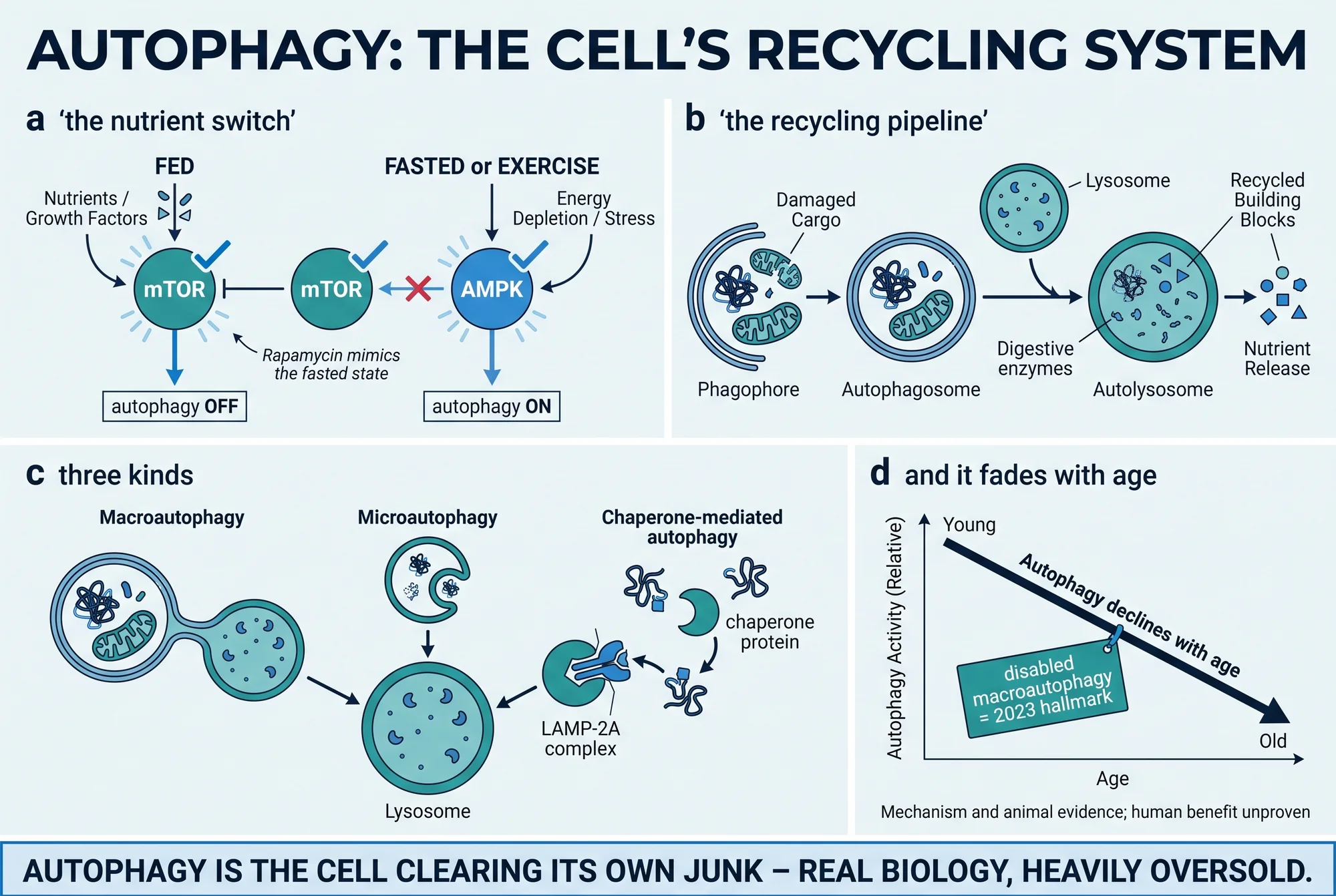
What Is Autophagy?
Autophagy is the cell's recycling system: it packages up worn-out and damaged parts, digests them in the lysosome, and returns the raw materials as building blocks and fuel. This explainer covers what it is, its three types, how Ohsumi's yeast work won a Nobel Prize, how nutrient sensors control it, why its failure is a hallmark of aging, and what the fasting, exercise, rapamycin, and spermidine evidence does — and does not — show in humans.
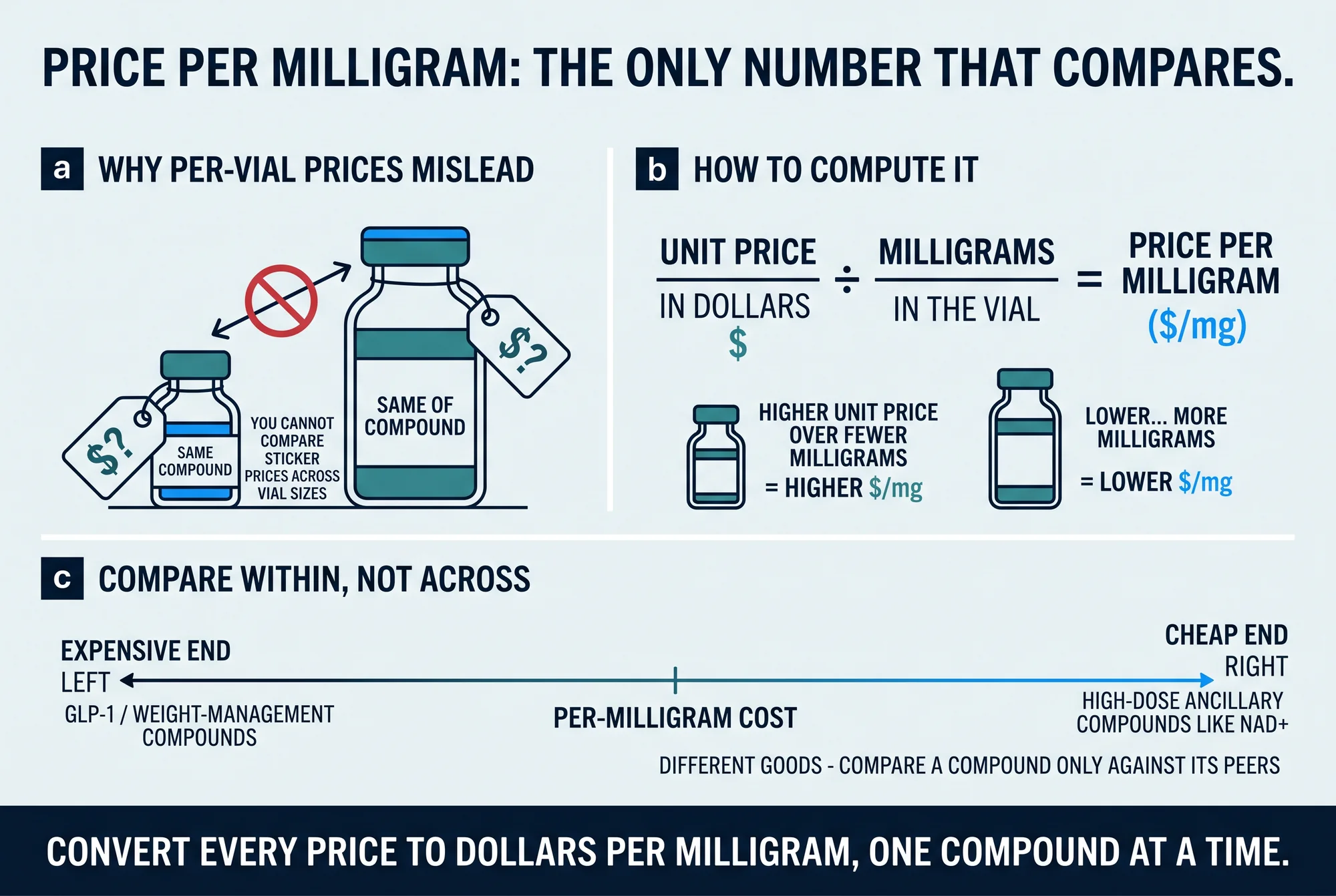
Price per Milligram
In the research-use-only peptide market the same compound is sold in vials of very different sizes, so the sticker price compares nothing. This explainer shows how to reduce any listing to price per milligram, why bigger vials are almost always cheaper by it, how far the unit reaches across compounds and categories, and the one case — products sold by volume or units — where it cannot be computed at all.
Coverage
The areas we study
A growing taxonomy of longevity and health-science topics, each a hub for the research and intelligence we publish.
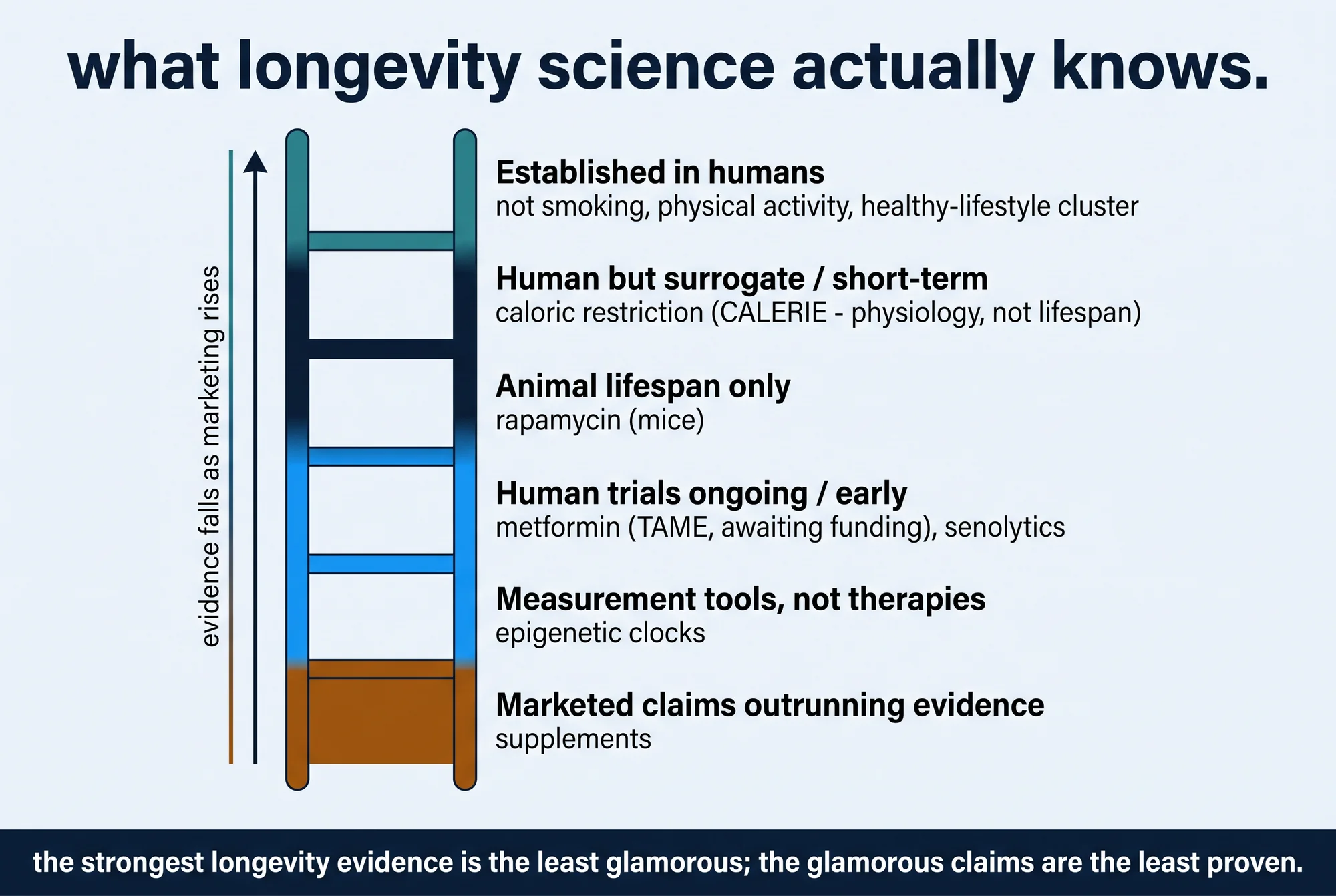
Longevity
11The science of extending healthy lifespan — the biology of aging, the interventions claimed to slow it, and the evidence that separates the two.
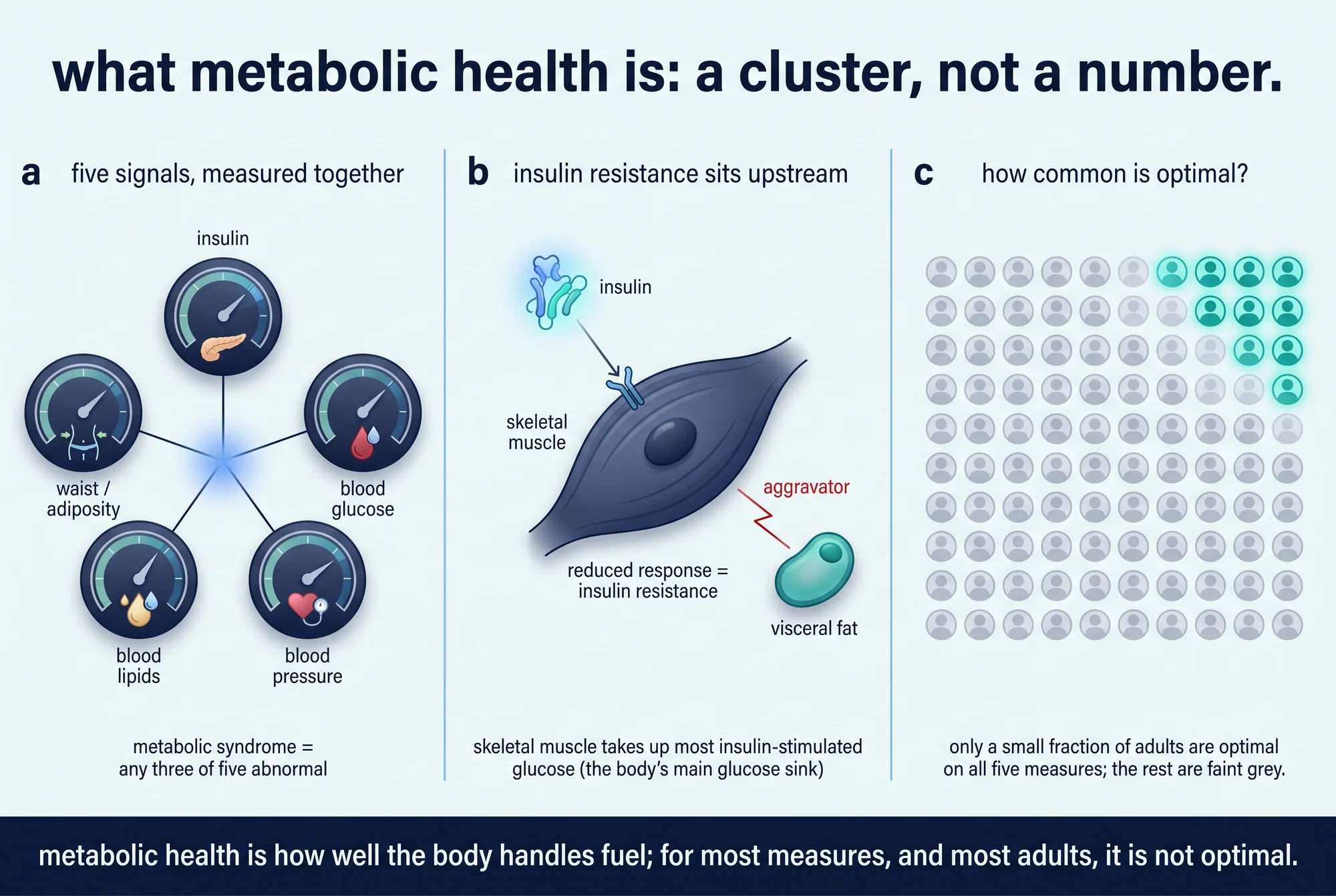
Metabolic health
9Insulin, glucose, body composition, and the incretin revolution — the metabolic systems at the center of modern longevity medicine.
GLP-1s
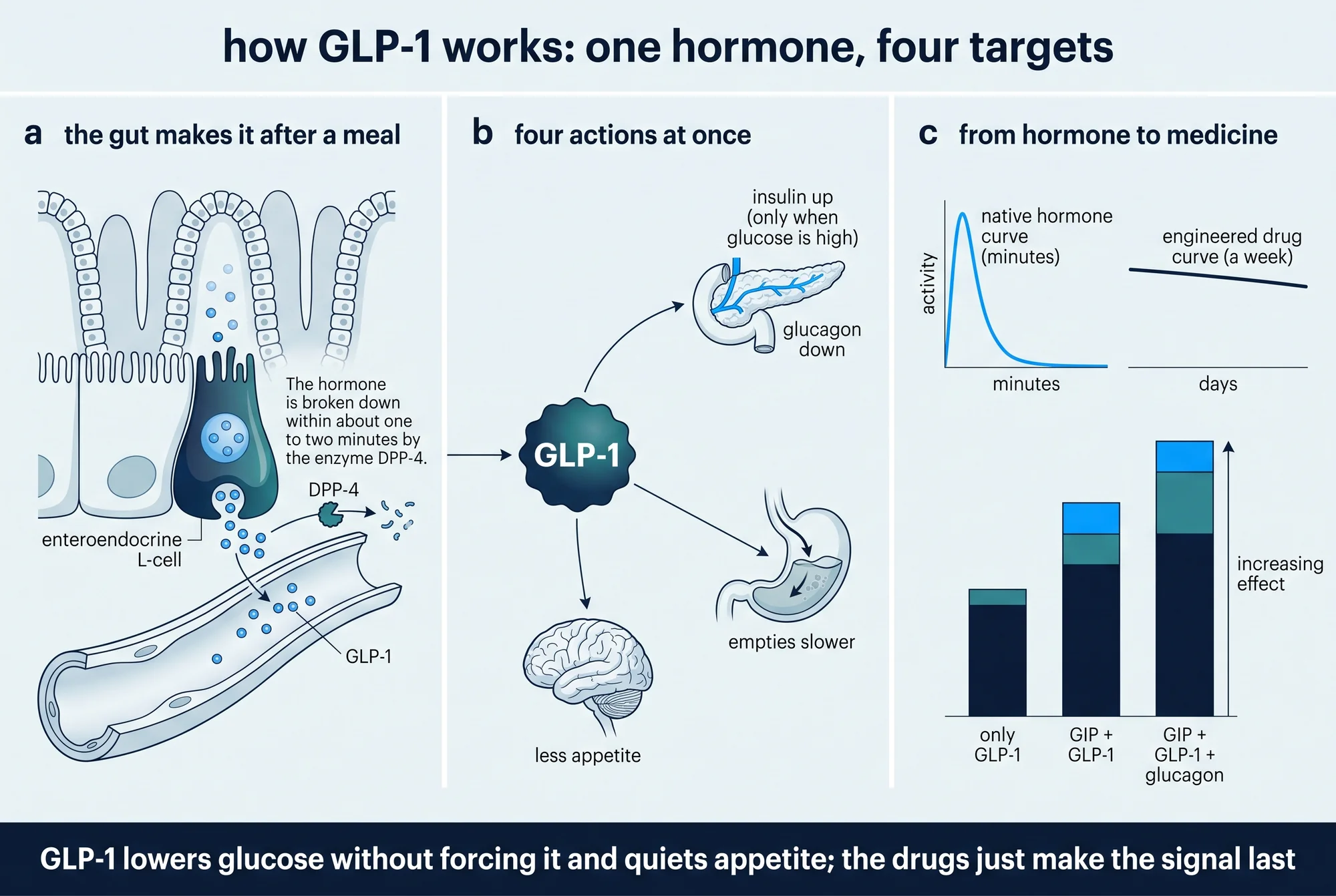
8Semaglutide, tirzepatide, retatrutide, and the incretin pipeline — the pharmacology, the market, and the claims made about their effects beyond weight.
Therapeutic peptides
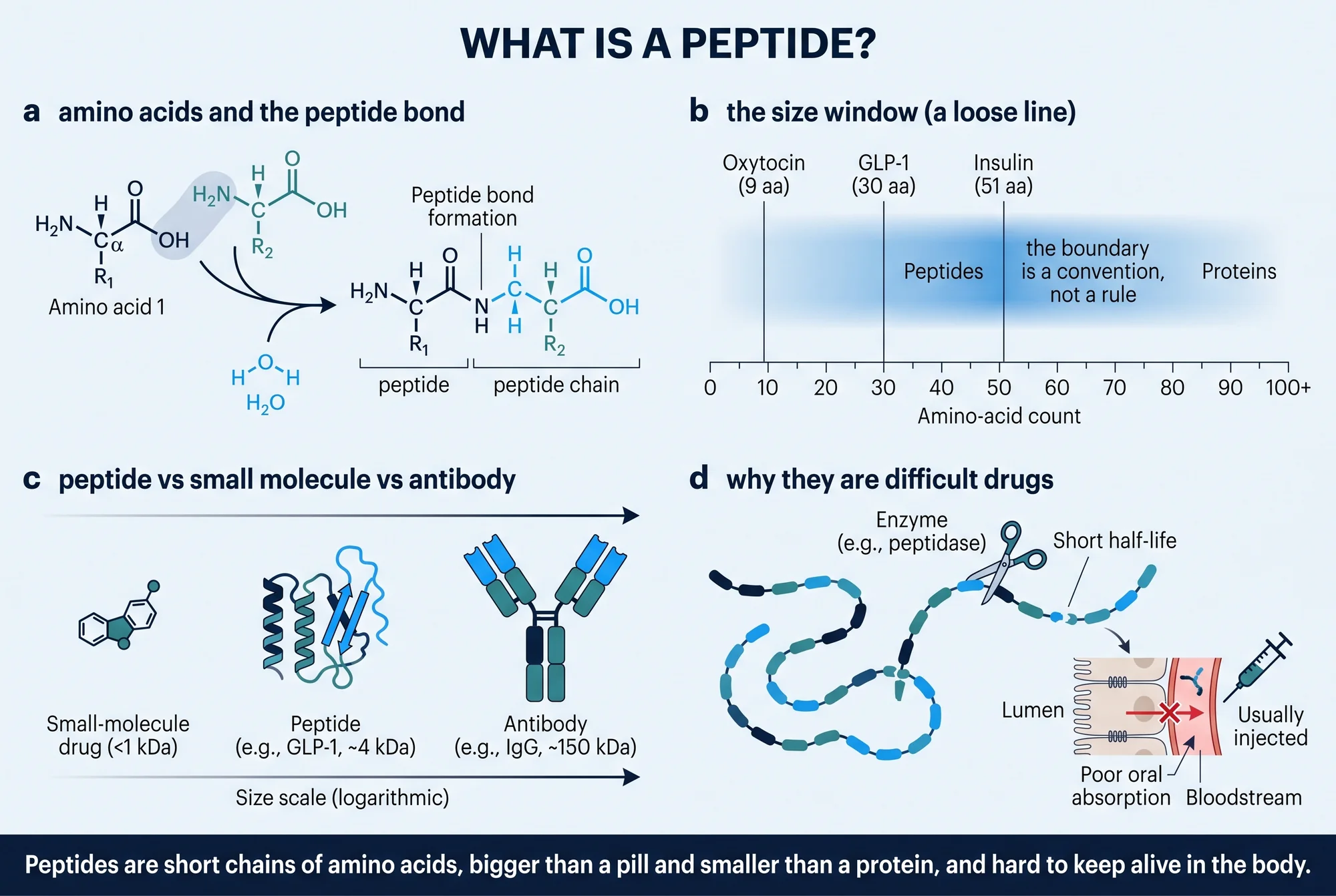
11From approved medicines to research-use-only compounds — the science, the subculture, and the evidence gaps across the peptide universe.
Peptide markets
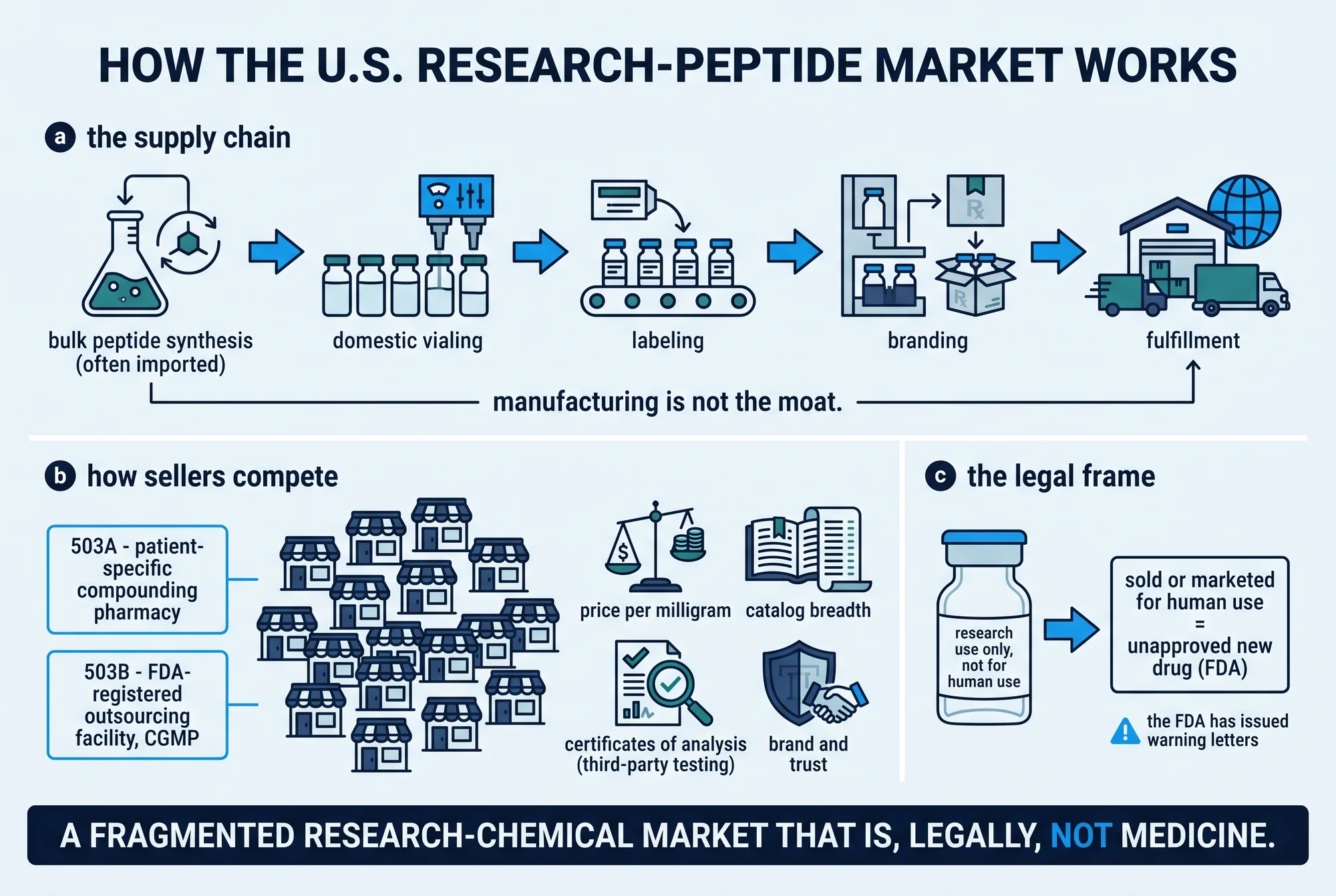
10Pricing, seller structure, and demand across the research-use-only peptide economy — where the market prices attention rather than evidence.
Aging biology
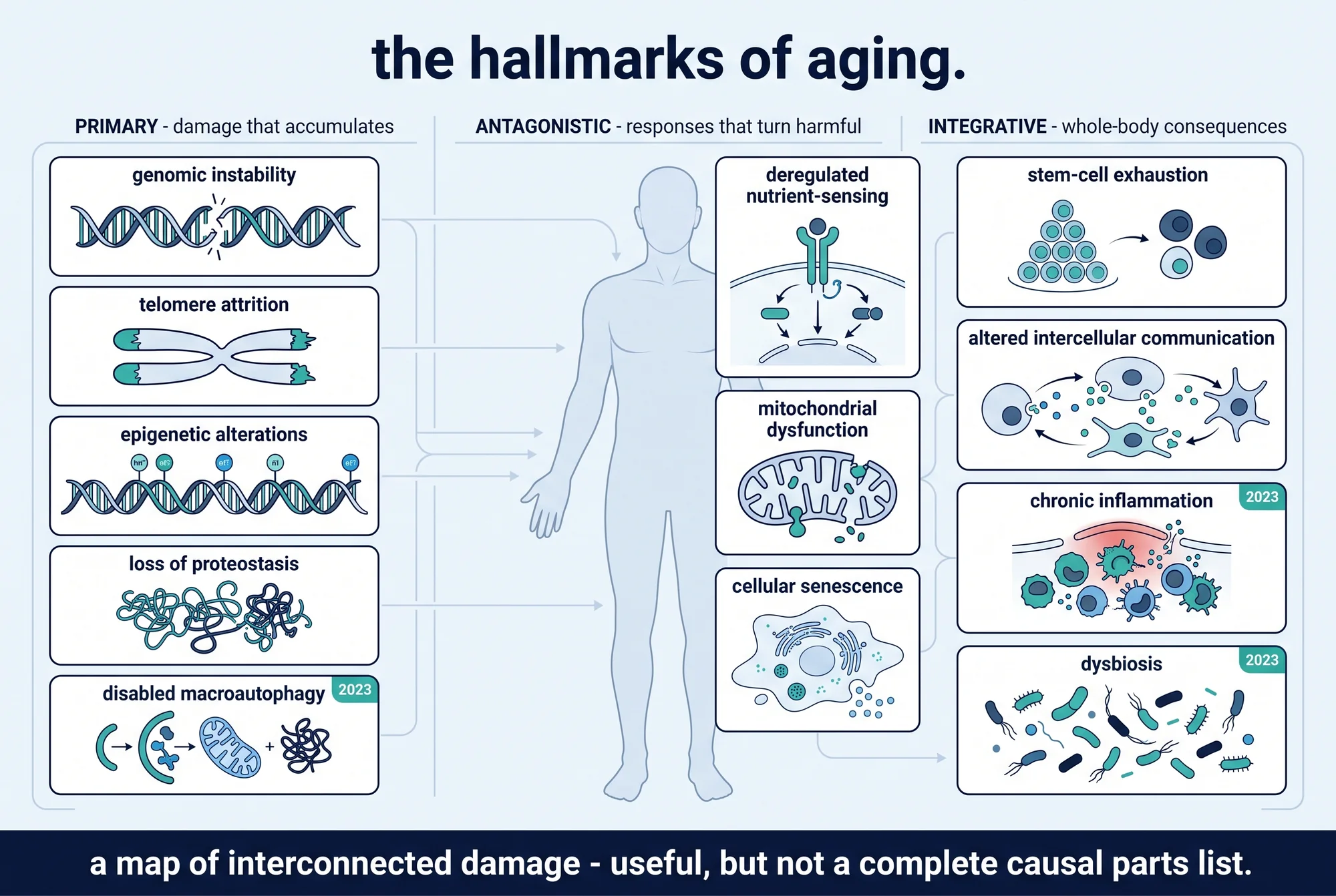
9The cellular and molecular hallmarks of aging — and how honestly they map onto the interventions marketed against them.
What we do
A research practice that speaks both science and markets.
We work at the intersection of the evidence base and the decisions that ride on it — publishing what we learn and advising those who need to act on it.
Explore servicesResearch & evidence reviews
Commissioned literature reviews and technical reports that separate what is shown from what is claimed.
Market intelligence
Sizing, composition, pricing, and trend studies for longevity, peptide, and metabolic-health markets.
Advisory & consulting
Independent guidance for operators, investors, and clinicians who need the science to be defensible.
Insights
Notes & commentary
Five things 'peptide interest' can mean — and why they're not the same
Search interest, social attention, media coverage, commercial availability, and clinical proof are five different signals. Confusing them is the most common error in the peptide conversation.
Why the same peptide can cost several times more from one seller than another
In the research-use-only peptide market, price dispersion is the defining feature — not noise. Here is where it comes from, and why a headline average tells you little.
Working on something where the science has to be right?
Tell us what you are trying to decide. We will tell you what the evidence actually supports.
Start a conversation